
Introduction
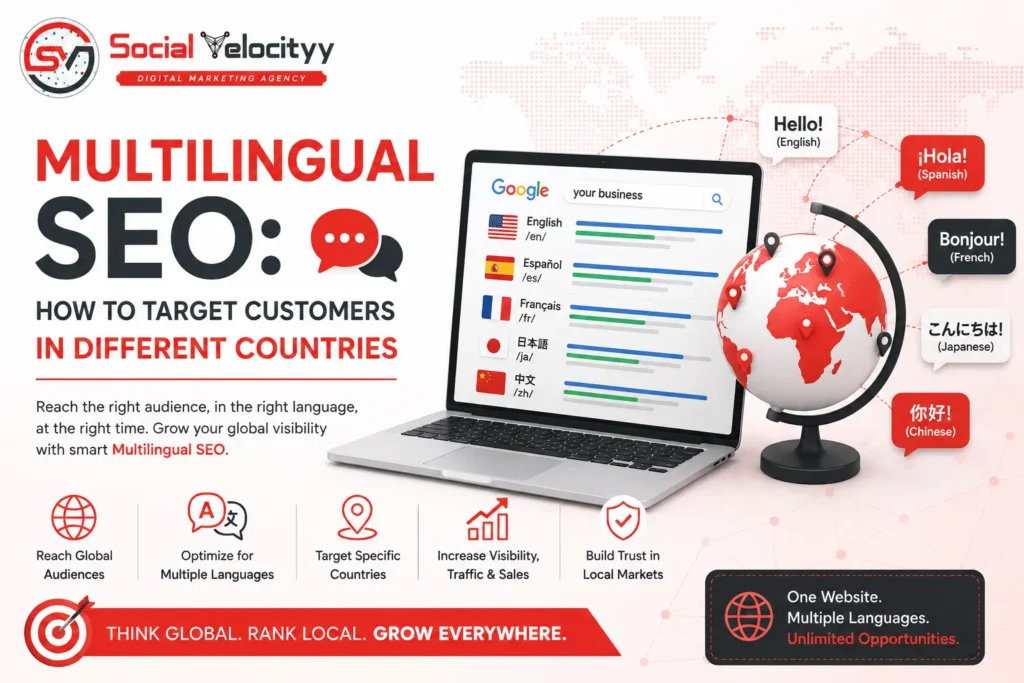
Multilingual SEO has become an important priority for businesses that want sustainable digital growth. Multilingual SEO optimizes website versions for users who search in different languages, even when those users live in the same country. The subject can appear complicated because platforms, competition, customer expectations, and technology continue to change, yet the strongest approach begins with clear goals and useful execution.

Multilingual SEO: Key SEO Takeaways
Multilingual SEO should connect user intent, useful information, trustworthy evidence, and a measurable next step. Apply the recommendations naturally and review performance after publishing.
For authoritative background, review the Google SEO Starter Guide. This, along with external source support, supports the guidance and gives readers a reliable reference.
Effective localization preserves meaning, intent, cultural relevance, and conversion clarity rather than translating individual words in isolation. This guide explains multilingual SEO in practical language, including the planning process, implementation steps, performance measures, and mistakes that can prevent progress. The aim is to help businesses make informed decisions without keyword stuffing, artificial engagement, or unsupported shortcuts.
Understand the Core Concept
Multilingual SEO optimizes website versions for users who search in different languages, even when those users live in the same country. In practice, it connects website translation with language targeting so the business can reach the right audience and provide a consistent experience. The exact tools may change, but relevance, clarity, and trustworthy information remain essential.
Modern search visibility depends on technical accessibility, useful information, clear intent matching, and credible brand signals. AI-powered search has expanded the formats in which helpful pages may be discovered, but it has not removed the need for sound SEO foundations. A successful plan therefore considers both visibility and what happens after a person discovers the business. Traffic or attention is useful only when it creates a meaningful path toward enquiry, purchase, booking, subscription, or another defined outcome.
Why It Matters for Business Growth
Effective localization preserves meaning, intent, cultural relevance, and conversion clarity rather than translating individual words in isolation. When the work is aligned with commercial priorities, language-level impressions become easier to evaluate, localized conversion rates become easier to evaluate, correct-language landing sessions become easier to evaluate, and international engagement becomes easier to evaluate. This gives decision-makers better evidence for allocating time and budget.
Businesses commonly struggle because they begin with tactics before defining the customer, offer, and measurement plan. A better approach connects strategy, execution, and review. It also distinguishes temporary movement from a reliable result that can be repeated or scaled.
A Step-by-Step Strategy
Use the following process as a working plan. The order can be adjusted for the business, but each step should have a clear owner and a measurable purpose.
- Step 1: Research how native speakers describe the problem.
- Step 2: Create stable URLs for each language.
- Step 3: Use professional human review.
- Step 4: Add accurate hreflang annotations.
- Step 5: Localize metadata, navigation, and forms.
- Step 6: Track performance by language version.
Best Practices for Stronger Results
A reliable multilingual SEO framework begins with a clear purpose and accountable ownership. Teams should treat multilingual SEO as a measurable business process rather than an isolated marketing task. When multilingual SEO is connected to customer needs and commercial outcomes, optimization becomes more focused and easier to defend.
The most effective programs focus on quality and consistency. Begin by researching how native speakers describe the problem, create stable URLs for each language, and use professional human review. These actions should support hreflang implementation rather than exist as disconnected tasks. Document assumptions before making changes so later reports can explain what actually influenced performance.
Use specific language, realistic promises, and content that reflects real customer needs. Test meaningful variables one at a time whenever possible. When a campaign or page performs well, identify the underlying reason before copying it elsewhere. This protects quality and makes scaling more deliberate.
How to Measure Results
Measurement should connect activity to decisions. Use localized keywords as part of the reporting context, but avoid relying on one number. Review a balanced group of indicators:
- Language-level impressions
- Localized conversion rate
- Correct-language landing sessions
- International engagement
Compare results with an appropriate baseline and enough data. Segment by audience, location, device, page, platform, or campaign when that reveals a meaningful difference. The purpose of reporting is to decide what to improve, stop, protect, or scale.
Common Mistakes to Avoid
Even a strong idea can underperform when execution is rushed. Watch for these common problems:
- Machine-translating without review.
- Mixing languages on one URL.
- Forgetting localized metadata.
- Using flags as a substitute for language labels.
Avoiding these errors protects both budget and brand trust. Create a short quality checklist, confirm that tracking works, and have a knowledgeable person review important customer-facing information before publication or launch.
A Practical 90-Day Improvement Plan
- Days 1–30: Establish the baseline, confirm tracking, review competitors, and fix the most serious foundation problems.
- Days 31–60: Implement the priority actions, publish or launch carefully, and collect enough data for useful comparison.
- Days 61–90: Review quality and business outcomes, improve weak points, and expand only the parts supported by evidence.
This phased approach keeps implementation manageable and gives the team time to learn before committing more resources.
Build a Sustainable Improvement Cycle
Treat the strategy as an ongoing system rather than a one-time task. Schedule regular reviews, assign responsibility for corrections, and preserve a reliable baseline for comparison. Small improvements applied consistently can compound into stronger visibility, better conversion quality, and clearer marketing decisions without depending on risky shortcuts.
Turn the Strategy Into a Repeatable Workflow
A documented workflow makes the work easier to improve. Record the objective, audience, owner, deadline, approval rule, and expected result before execution. After launch, compare the evidence with the original assumption and keep a short decision log. This prevents teams from repeating failed experiments and helps new contributors understand why earlier choices were made.
Long-Tail Topics and Practical Guidance
The following specific topics answer narrower search needs and turn the main strategy into practical decisions.
Website translation checklist for 2026
For the query “website translation checklist for 2026,” connect crawlability, relevance, helpful content, and measurable search visibility. Build the answer to “website translation checklist for 2026” around clear ownership, action, and measurement. Evaluate guidance for “website translation checklist for 2026” through user value and qualified outcomes.
Language targeting strategy for business websites
For the query “language targeting strategy for business websites,” connect crawlability, relevance, helpful content, and measurable search visibility. Build the answer to “language targeting strategy for business websites” around clear ownership, action, and measurement. Evaluate guidance for “language targeting strategy for business websites” through user value and qualified outcomes.
Hreflang implementation optimization guide for 2026
For the query “hreflang implementation optimization guide for 2026,” connect crawlability, relevance, helpful content, and measurable search visibility. Build the answer to “hreflang implementation optimization guide for 2026” around clear ownership, action, and measurement. Evaluate guidance for “hreflang implementation optimization guide for 2026” through user value and qualified outcomes.
Localized keywords improvement plan for small businesses
For the query “localized keywords improvement plan for small businesses,” connect crawlability, relevance, helpful content, and measurable search visibility. Build the answer to “localized keywords improvement plan for small businesses” around clear ownership, action, and measurement. Evaluate guidance for “localized keywords improvement plan for small businesses” through user value and qualified outcomes.
Frequently Asked Questions
What does this strategy involve?
Multilingual SEO optimizes website versions for users who search in different languages, even when those users live in the same country.
How long does it take to produce results?
Meaningful SEO improvement often develops over several months because crawling, competition, authority, and content quality all influence progress. Early indicators should be reviewed, but major decisions should use enough data to account for normal variation.
Can a small business implement this approach?
Yes. A small business can begin with a narrow audience, one priority outcome, and a manageable action plan. Focused execution usually creates better learning than spreading limited resources across too many activities.
What is the difference between multilingual and international SEO?
Multilingual SEO focuses on language versions, while international SEO may also target countries, currencies, regulations, and regional customer needs. Many projects require both.
Multilingual SEO improves through documented decisions and reliable evidence. Review Multilingual SEO regularly so quality and business value continue to grow.
Multilingual SEO should be reviewed against audience needs, trustworthy evidence, and measurable business outcomes.
Conclusion
This approach works best when a clear strategy is followed by careful implementation, reliable measurement, and regular improvement. Start with the customer and business goal, complete the highest-impact actions first, and use evidence to guide the next decision. For tailored help, contact Social Velocity and build a plan designed around your market, resources, and growth objectives.